Similar Creative Processes
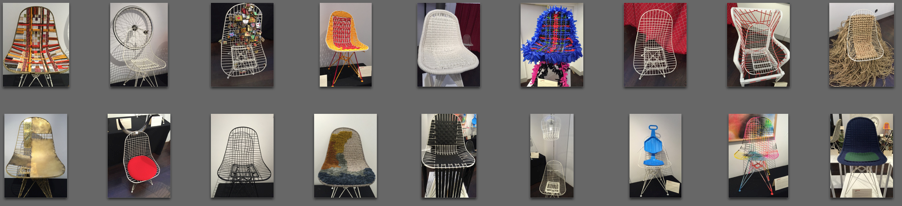
Similar creative processes can be found in music, painting, gastronomy, and thus open the door to intriguing correspondences.
Producing variations on a theme is common in painting, music, gastronomy, as well as in dance, literature, design, fashion, games, and even online through memes. It is a key ingredient of creativity in general, and perhaps of the way the mind works. The techniques employed are often similar, which enables transpositions and analogies across disciplines.
Variations in Music
Variations naturally take many external forms. In music, they range from simple modulations of a given motif to the introduction of shifted melodic lines. Structures such as counterpoint and the presence of a repeated rhythmic voice over which the composer or performer improvises serve as fertile ground for variation.
Employing different timbres, keys, rhythmic patterns, tempi, and dynamic levels also allows for endless variation. In his Two- and Three-Part Inventions, for example, Bach illustrates various techniques for pedagogical purposes. His Goldberg Variations go much further, offering thirty distinct treatments of an aria through canons, fugues, chorales, and more. Mozart was equally adept at the form, producing twelve variations on “Ah! vous dirai-je, Maman” (K. 265), examples of which appear throughout this site. Beethoven composed thirty-three variations on Diabelli’s waltz. In serial music, variation becomes central: a composition begins with a series of twelve tones that are then transformed through inversions, mirror effects, and alterations of note durations.
Variations in Painting
Variations abound in painting as well, even if the term is used less frequently. Artists may revisit the same subject repeatedly. Claude Monet painted Rouen Cathedral thirty times at different hours of the day, in various seasons, and from multiple perspectives; the cathedral’s portico—his most frequent motif—is shown under changing light and color schemes. The haystacks series further explores this theme. Pablo Picasso examined the bull motif, moving from dense, detailed depictions to increasingly stripped-down versions in which the animal is suggested by just a few lines. The Eiffel Tower inspired Georges Seurat, Henri Rousseau, Marc Chagall, and Robert Delaunay. Leonardo da Vinci’s Mona Lisa has been reinterpreted—or even parodied—countless times. Georges Braque created numerous bird variations, and non-representational painters like Mark Rothko, Gottfried Honegger, and Pierre Soulages often draw on a motif rather than a subject, deploying it freely according to their fancy.
Gustatory and Olfactory Variations
The same approach appears in taste and smell. How many different recipe variations exist for a single dish, Beaujolais wines that explore the Gamay grape, or eau de colognes with subtly distinct fragrances? By adjusting ingredient quantities, adding embellishments like spices or complementary scent molecules, and manipulating countless parameters or constraints that governed the original creation, the chef, winemaker, or perfumer unleashes imagination around a central theme.
Variations in Dance
In dance, variation on a theme is more than common practice—it is almost a founding principle. A repeated or modulated rhythm invites improvisation of arabesques that echo the original motif with subtle inflections. Again, the scope of possible variations is limited only by the dancer’s imagination. Basic mechanisms include the amplitude of movements, rotations, different orientations of the limbs, torso, and pelvis, repetition of certain movement sequences, and the addition of ornamentations—such as a sacada, boleo, or gancho in tango—or transitional elements like pauses or marked steps. These procedures echo modes of operation in other fields.
Variations in Literature
The principle of variation is also pervasive in literature and has been studied extensively. Queneau’s Exercises in Style retell the same story a hundred times in different ways. Douglas Hofstadter produced and compiled dozens of English translations of Clément Marot’s poem “Ma mignonne.” In his book Le Ton beau de Marot, he analyzes in detail the formal constraints—both syntactic and semantic—that honor the original while creating spaces for free creativity.